
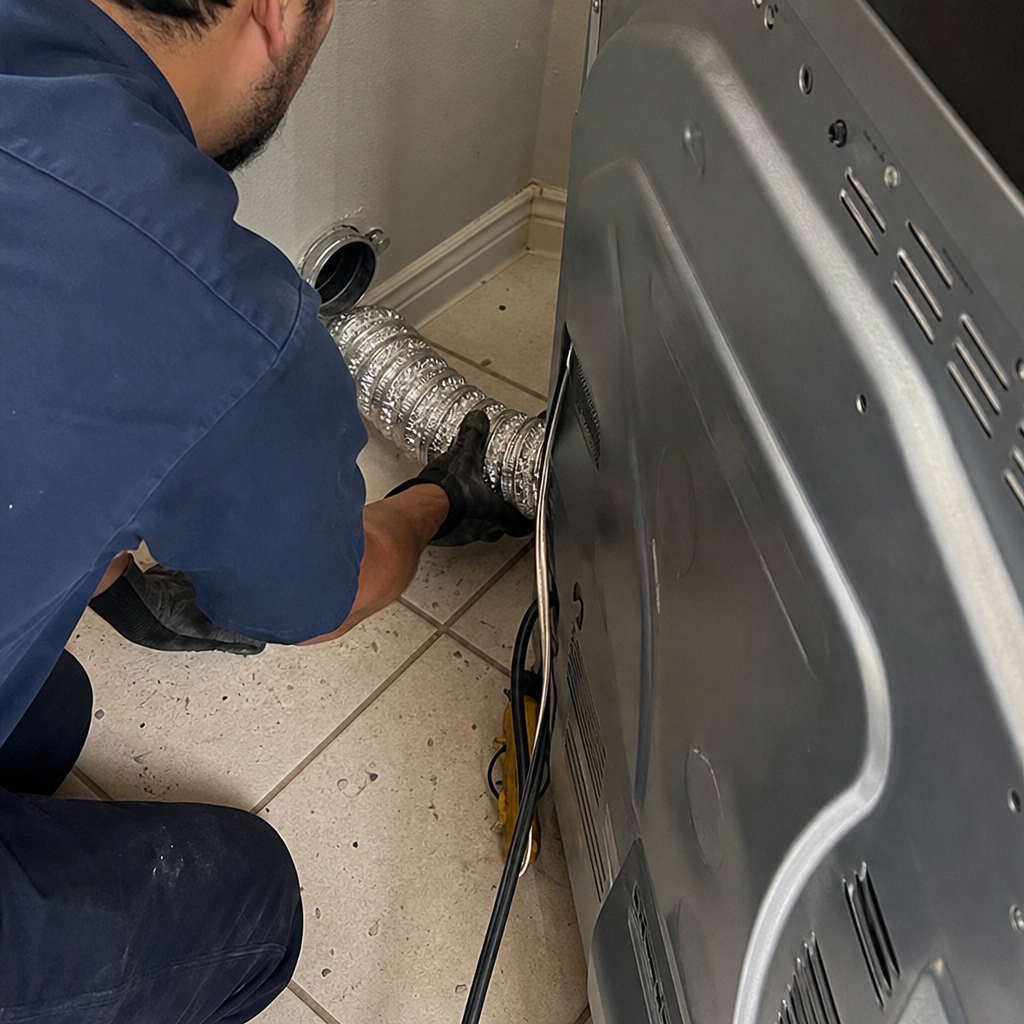
Honeywell Duct Sealing & Repair: The Texas Owner’s Guide
We stock and install Honeywell-compatible duct sealing and repair components across Texas, with most residential jobs running $280-$620 installed and same-day service available when you call before noon. Honeywell’s duct sealing products, including their electronic air cleaner gaskets, bypass damper seals, and ZonePerfect zoning system duct connectors, are built for tight tolerances that degrade faster in Texas heat and clay-soil foundation shifts than the national average. If your Honeywell system is pushing conditioned air into the attic or your zones are fighting each other, the seal failure is usually at a joint or transition point we can pinpoint with a camera in about ten minutes.
Most Texas homeowners figure out something’s wrong when the utility bill climbs $40-$80 in a single month, or when one room never reaches the thermostat setpoint while another freezes. Wade Kellerman, our owner, grew up watching his grandfather chase these exact symptoms in Oak Cliff houses with settling slabs - the Dallas clay shrinks and swells, and every duct joint takes that stress. We see it constantly in Garland, Plano, and the older Mesquite subdivisions where the original Honeywell installs are hitting twenty-five to thirty years.
Which Honeywell Models This Applies To
Honeywell’s duct sealing ecosystem spans several product families, and matching the right repair approach matters. The F100 and F200 electronic air cleaners use a specific closed-cell foam gasket around the cell access door that compresses permanently after roughly eight to twelve years in Texas attic heat - standard weatherstripping won’t seal the ionizing field properly. ZonePerfect systems (HZ311, HZ322, HZ432) rely on damper shaft seals and flex-duct transition boots that crack where the rubber meets the galvanized collar. For whole-house dehumidifier tie-ins, the DR90 and DR120 use a distinct 6-inch flex connector with an integrated backdraft damper that seizes if the seal adhesive degrades.
To identify your exact component, check the silver label on the air cleaner frame or the damper actuator housing - we need the series prefix and the four-digit date code, not just the model name. The date code tells us which adhesive formulation Honeywell was using that year; pre-2012 gaskets used a solvent-based adhesive that turns to powder in Texas attics, while post-2012 switched to acrylic that holds up better but still fails at the corners. We carry both OEM Honeywell replacement gaskets and aftermarket equivalents from DuctMate and DuroDyne that meet the same CFM leakage specs at roughly 60% of the OEM parts cost. For ZonePerfect dampers, we prefer OEM seals - the aftermarket versions we’ve tested in Arlington and Richardson installs don’t maintain the 0.5-inch static pressure differential Honeywell specifies for proper zone balancing.
Signs Your Honeywell Duct Sealing & Repair Is Failing
- Uneven temperatures room to room. When a Honeywell zone damper seal fails, conditioned air bleeds into the closed duct run instead of pushing to the calling zone. The thermostat in the master bedroom reads 68 while the guest room sits at 78, and the system runs longer trying to satisfy both.
- Dust blowing from ceiling registers after the air cleaner runs. A degraded F100 or F200 door gasket lets attic air bypass the filter media entirely. Texas attics pull in pollen, insulation fragments, and rodent debris - you’ll notice it first as a gray film on furniture near the return grille.
- Whistling or rushing air at duct joints. That sound is pressure escaping through a gap that shouldn’t exist. In Honeywell systems, it often traces to the flex-duct collar on a dehumidifier bypass or a cracked transition boot where the zone damper meets the trunk line.
- Humidity that won’t drop below 60% despite the dehumidifier running. The DR90 and DR120 draw return air through a sealed flex run; when that seal splits, the unit recirculates moist attic air instead of dehumidifying the living space. We see this in Katy and Sugar Land homes where summer attic temps hit 140 degrees.
- System short-cycling with no thermostat error. A leaking bypass damper in a ZonePerfect setup tricks the static pressure sensor into reading low flow, causing the board to shut the compressor off prematurely. The house never gets comfortable, and the compressor takes the wear.
Replacement Cost & What’s Included
Our installed pricing for Honeywell duct sealing and repair in Texas breaks down as follows:
- Electronic air cleaner gasket replacement (F100/F200): $280-$380
- ZonePerfect damper seal kit (per zone, HZ-series): $340-$480
- Dehumidifier flex connector with damper (DR90/DR120): $420-$620
- Full duct joint sealing with mastic and mesh (per linear foot): $18-$26
The range reflects access difficulty - attic work in a Colleyville two-story with a tight scuttle costs more than a Frisco ranch with a walkable attic. Every quote includes the camera inspection before and after, so you see the leak and you see it sealed. We apply our $50 Off Any Repair Over $250 automatically; seniors and veterans receive the permanent 5% discount on top. The 90-Day Done Right Promise covers the labor and materials - if the seal fails or the zone doesn’t balance, we return and make it right, no paperwork, no arguing. We stand behind it - and around here, that has meant something for a long time.
DIY or Call Us?
There’s a safe middle ground here. A homeowner can pull the air cleaner access door and visually check whether the gasket is crumbling or compressed flat - if it’s turning to powder, you’ve found your problem. You can also listen at each register with the system running to isolate which zone is leaking. What we don’t recommend is crawling through a Texas attic in July to replace a zone damper seal or attempting to reseal a dehumidifier bypass with hardware-store tape. Attic heat exposure is real, and a misaligned damper blade can snap the actuator linkage or worse, leave a zone fully open when the board thinks it’s closed.
We carry Honeywell-compatible gaskets, seals, and connectors on every service truck, and most repairs finish in a single visit. If you’re not sure which component is failing, call us at (866) 347-2063 - we’ll walk through what you’re seeing, and if you have another company’s written estimate, our Free Second Opinion applies.
FAQs
How long should Honeywell duct seals last in Texas?
In Texas attic conditions, expect eight to twelve years on electronic air cleaner gaskets and ten to fifteen on zone damper seals if the attic stays below 120 degrees. Attics in Waco and Temple that hit 150 degrees regularly cut that lifespan by a third. Call (866) 347-2063 if you’re past the eight-year mark and noticing symptoms - estimates are free.
Can a failing Honeywell duct seal be repaired instead of replaced?
Temporary repair with foil tape or caulk will last one season at best and often makes proper replacement harder by leaving residue on the sealing surface. We replace the component with the correct material so the repair holds. Call (866) 347-2063 for upfront pricing before we start - the number on the phone is the number on the invoice.
How long does a Honeywell duct sealing repair take?
Most single-component replacements take ninety minutes to two hours, including the camera inspection and airflow verification. Full zone system resealing runs three to five hours. We complete most jobs in one visit, and you’ll see the before-and-after footage before we pack up. Call (866) 347-2063 to schedule.
Do you stock Honeywell duct sealing parts?
We stock OEM and quality aftermarket Honeywell-compatible gaskets, damper seals, flex connectors, and mastic on every truck, along with Lennox, Trane, and Carrier equivalents. Same-day service is available when you call before noon. Call (866) 347-2063 - a live person answers 24 hours a day.
Written by Wade Kellerman, Owner, Bellows Air Duct & Vent Co. of Texas at Bellows Air Duct & Vent Co. of Texas, serving Texas and nearby areas.